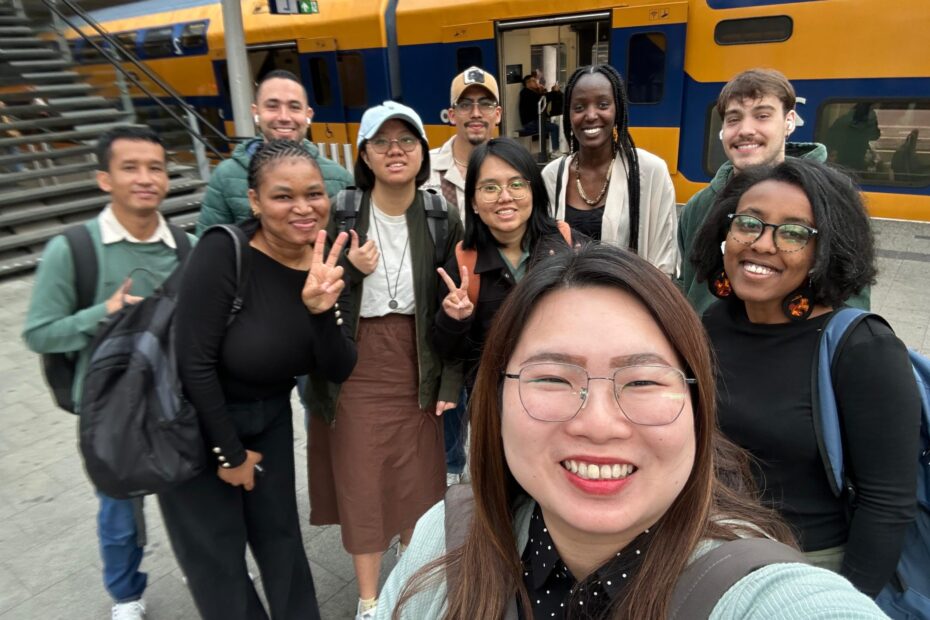


At the intersection of theology, history, culture, and technology, Elizabeth Widya
Herlina represents a new and dynamic voice in Indonesian Christianity. A candidate for special
pastoral ministry within the Christian Churches of java [Gereja Kristen Jawa (GKJ)] and the
most outstanding theology student at Marturia Christian College in Special Region of
Yogyakarta, Indonesia. Elizabeth is known for her academic excellence and innovative
theological perspective. Her work bridges Digital Theology, Postcolonial and Indigenous
Studies, and Constructive Theology, reflecting a deep commitment to making theology both
contextually grounded and globally relevant. As a selected student in Bridging Gaps 2025,
Elizabeth continues to explore new pathways for critical theological engagement. Her latest
research project, titled “The Hunger Games: Ghost of the (New) Capital,” employs the
dystopian metaphor of The Hunger Games Movie as a hermeneutical lens to interpret issues
surrounding indigeneity, ecology, and power in Indonesia particularly in the context of the
country’s new capital relocation from Jakarta to Kalimantan. Through this creative and critical
approach and the Hauntology theory from Jacques Derrida, she unveils the haunting parallels
between fictional empire-building and the real-world displacement of indigenous communities
and ecosystems.
Elizabeth’s theological imagination is deeply aware of Indonesia’s layered religious history, a
history interwoven with colonial legacies and missionary encounters. Her postcolonial lens
does not seek to reject this past outright but to reinterpret it: to uncover how Christianity, once
introduced through colonial structures, has been reclaimed, indigenized, and reshaped by local
believers. In this sense, Elizabeth’s work mirrors the very journey of the Gereja Kristen Jawa
(GKJ) itself, a church born from the faith and resilience of the Javanese people who
transformed a colonial inheritance into a living expression of contextual theology.
Founded officially on February 17, 1931, and a member of the Communion of Churches in
Indonesia (PGI) since May 25, 1950, the Gereja Kristen Jawa (GKJ) or Christian Churches of
Java stands as one of Indonesia’s most culturally grounded Protestant traditions. Today, GKJ
encompasses 307 congregations across 32 presbyteries in six provinces: Central Java,
Yogyakarta, East Java, West Java, Jakarta, and Banten. The story of GKJ began not with power
or privilege, but with the courage of the humble. In 1858, nine impoverished batik workers
from Banyumas walked nearly 300 kilometers to Semarang seeking baptism from missionary
W. Hoezoo, a journey that symbolized both faith and resistance to colonial barriers. Two years
later, in 1860, a small group of domestic workers in Purworejo also received baptism, forming
the earliest roots of GKJ.
Emerging from the grassroots of Javanese society, GKJ’s history reflects the faith of the
marginalized those who, despite poverty and illiteracy, embraced the transformative message
of the Gospel. Supported by missionary work from the Nederlandche Gereformeerde
Zendingvereniging (NGZV) and later the Gereformeerd Kerken (ZGK), GKJ spread through
Java’s towns and villages, nurturing a Christianity that speaks in the language, rhythms, and
values of Javanese culture. Today, GKJ continues to embody a contextual and communityoriented
theology, faithful to the Gospel while deeply attuned to the social and cultural realities
of its people. It is within this living tradition that emerging theologians like Elizabeth Widya
Herlina find both their roots and their inspiration crafting a theology that grows from local soil
yet reaches a global horizon.